Published May 29, 2026
Blogger reviews sell products when you lift specific quotes, lifestyle photos, and reaction clips from the original article and place them directly on your product detail pages. Brands routinely pay for this off-site coverage, yet leave the resulting assets stranded on the creator's site while their own pages read like technical spec sheets.
Moving this third-party validation to the point of purchase leverages the credibility of an outside voice right when the buyer hesitates.
According to the Spiegel Research Center, displaying reviews produces a 270% greater purchase likelihood for items with five reviews. Data indicates that 90% of consumers globally trust peer recommendations over standard brand advertising. This guide details a practical system for securing rights, clearing compliance, and positioning these assets on your storefront without increasing your ad spend.
Before modifying any page layout, one mandatory step dictates whether you can legally use these assets.
Lock Down Rights Before the Campaign Ends
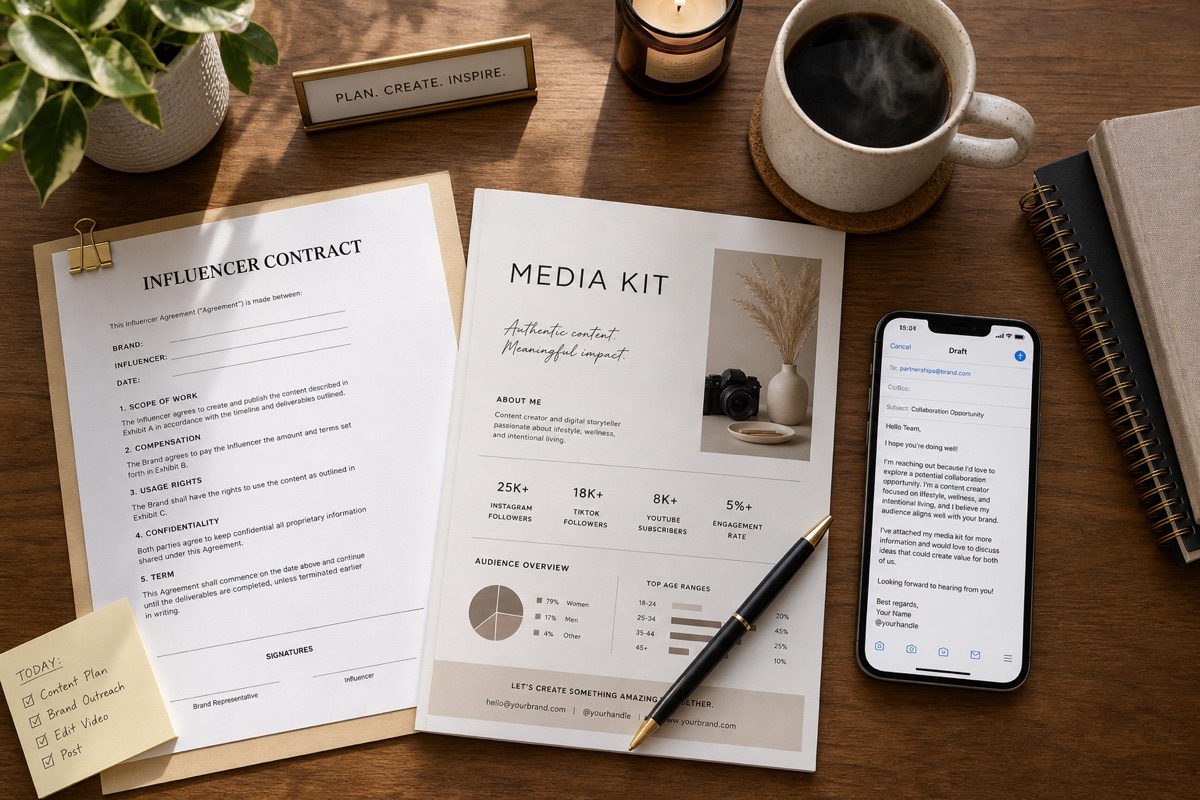
Content rights constitute the explicit written permission from a creator allowing you to reproduce their text, photography, or video on your brand-owned channels. When organizing your product coverage, you must insert this request into your initial campaign brief or influencer agreement rather than asking after the review goes live.
Retroactive requests often create awkward email exchanges, face significantly higher rejection rates, or trigger sudden demands for additional licensing fees from creators who feel ambushed by the late ask.
Securing these assets requires specific legal language that both parties sign before you ship the product.
A standard clause states that the brand retains non-exclusive rights to reproduce, excerpt, and display the published review content on brand-owned digital properties for 12 months with proper attribution. You must also distinguish between repurpose rights, which allow you to display the intact post, and usage rights, which permit you to chop, edit, or reformat the asset for different page layouts.
Photographers and bloggers frequently treat image licensing as a distinct permission category, so your contract must explicitly separate photo rights from written quote rights.
Most professional creators gladly agree to these terms when you present them clearly upfront during the negotiation phase. Brands that build this language into their outreach templates successfully convert standard mentions into a library of owned conversion assets from day one.
FTC Disclosure Requirements for Repurposing
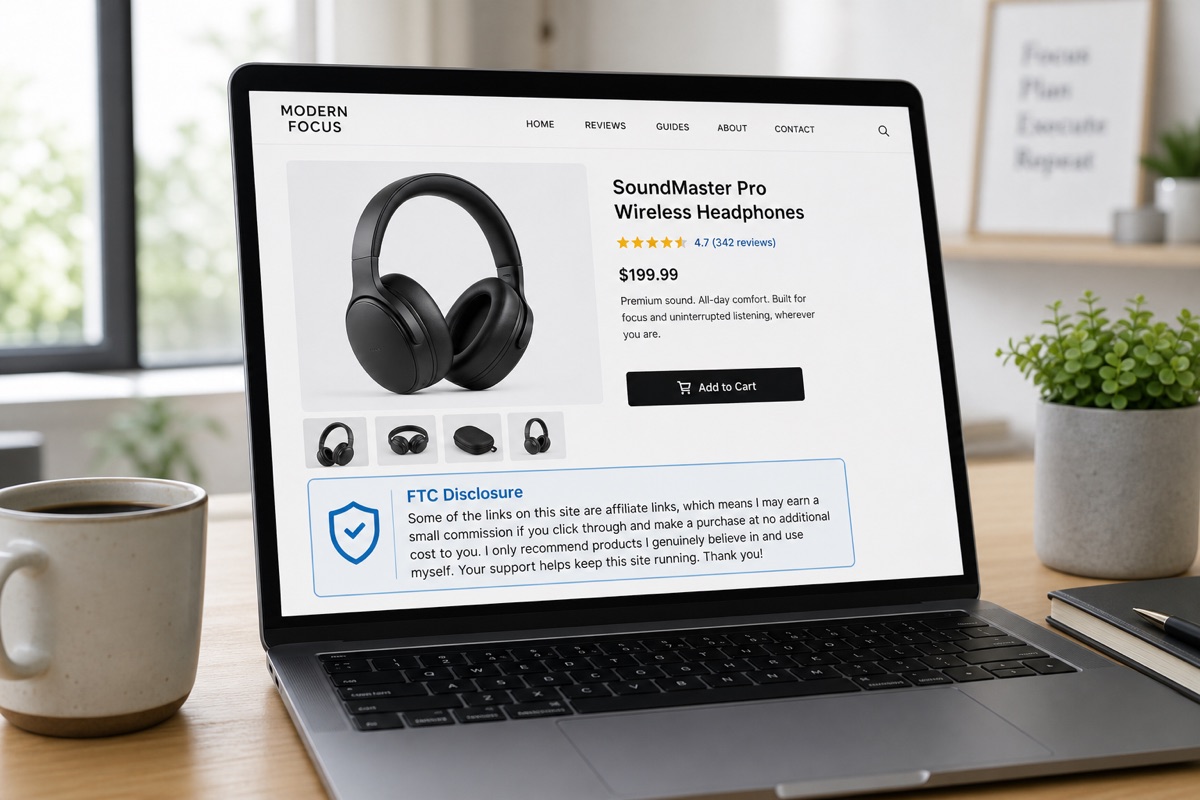
When your brand provides an item for free or compensates a creator financially, you must legally disclose that relationship to the consumer. This mandatory obligation travels directly with the content when you extract a quote and paste it onto your product page.
Implement a copy-ready attribution format directly beneath the excerpt. A phrase like "Review provided by [Blogger Name], product gifted for review" fully satisfies the requirement in an eCommerce context.
Rather than treating compliance as a penalty, operators should view transparent attribution as a powerful trust signal. Buyers who read a clear disclosure instantly recognize that the quote originated from an independent user rather than your own marketing department.
Research shows that 90% of customers consider personal recommendations their most trusted source of information. You can verify exact phrasing requirements for different media types by consulting the FTC endorsement guidance directly.
Choosing Quotes Photos and Reaction Clips
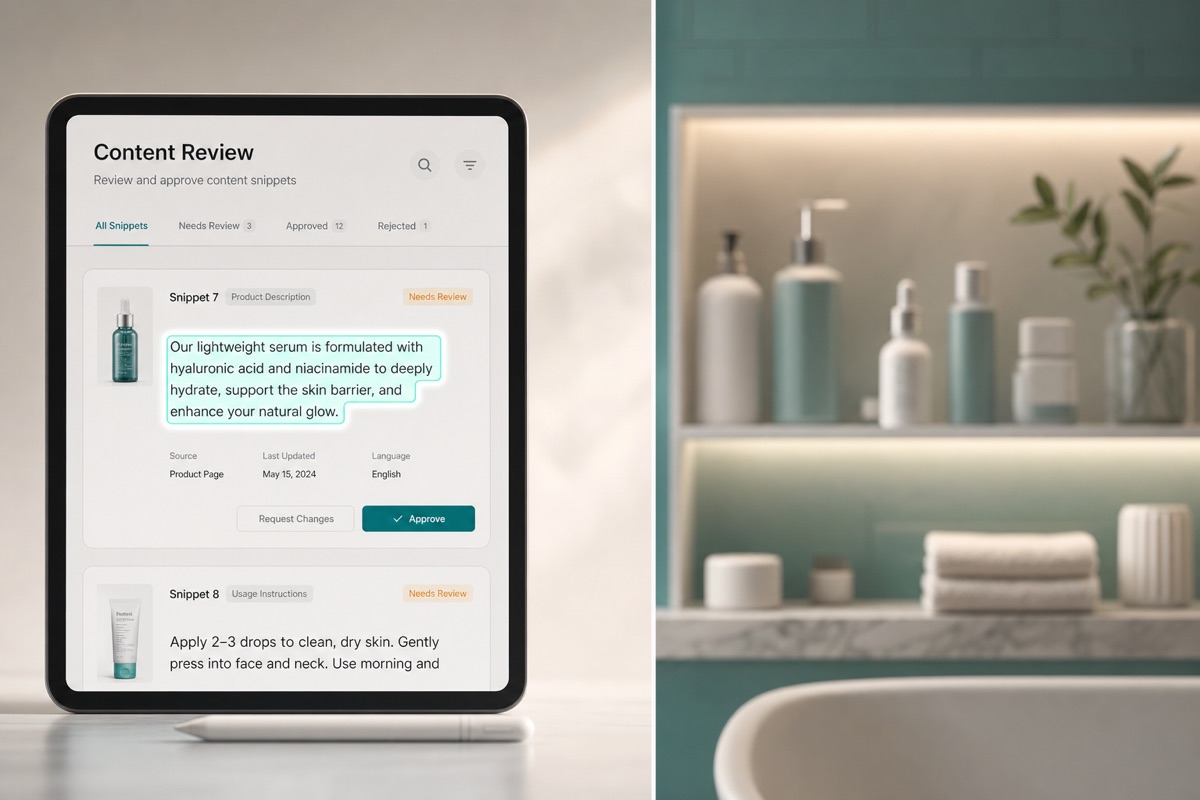
A conversion-ready pull quote relies on specificity rather than general sentiment. A phrase stating that a serum absorbed in under 30 seconds actively dismantles a buyer objection, whereas generic praise offers zero practical information.
Operators should scan past coverage for concrete details regarding texture, performance speed, scent profile, or bottle size. Extracting a single detailed sentence from an independent writer consistently outperforms an entire paragraph of polished brand copy.
Lifestyle photography extracted from these reviews demonstrates how the item looks in an unpolished environment. Studio shots provide necessary clarity, but a bathroom shelf or kitchen counter photo looks genuinely lived-in and relatable to the browsing customer. These authentic images belong in secondary galleries or dedicated social proof sections because they visually prove utility outside of a controlled lighting setup.
First-impression video clips capture an authentic unboxing reaction that scripted brand videos cannot replicate. Isolating a short snippet near your checkout button tackles purchase hesitation directly.
Since most storefront traffic originates from smartphones, compress these files to ensure flawless mobile loading over cellular networks. A clip that stutters or buffers endlessly damages trust immediately, driving users away before they buy.
Where to Place Review Assets on a Product Detail Page
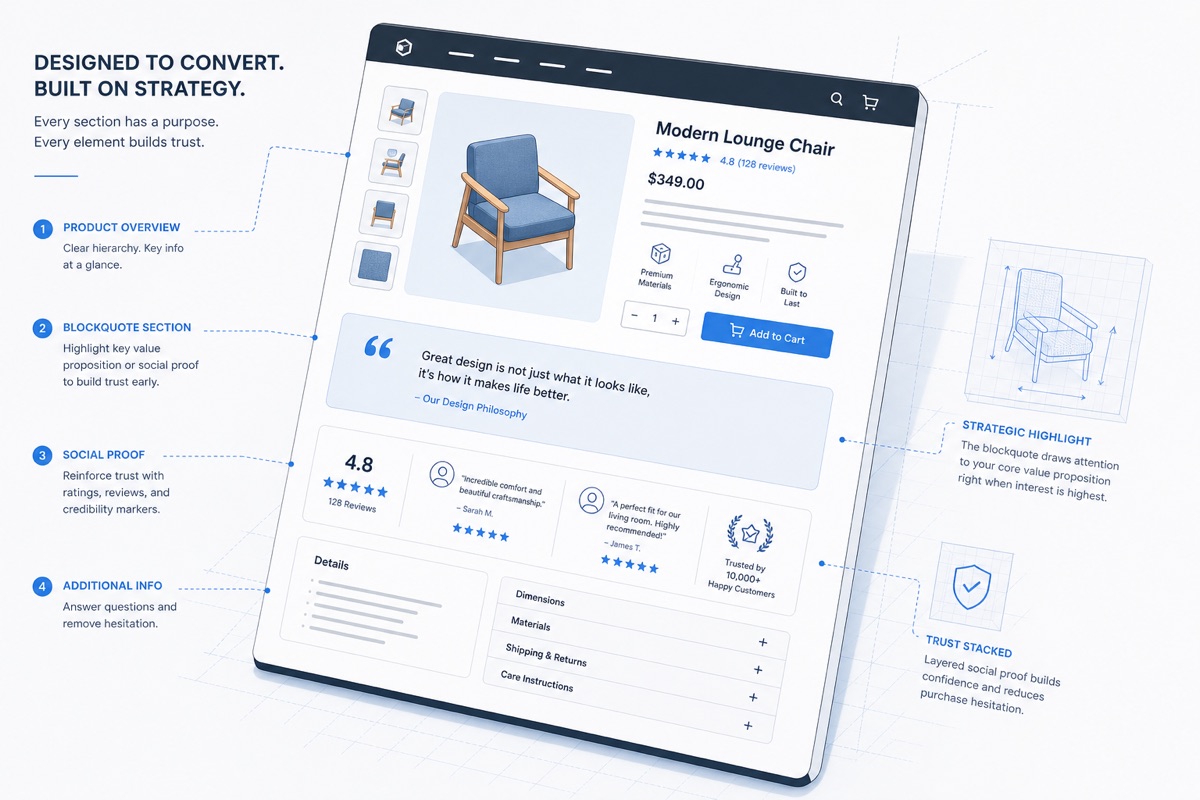
Positioning your strongest hero quote directly beneath the product title ensures the buyer sees third-party validation before scrolling. Intercepting skepticism at this immediate friction point prevents visitors from bouncing before they read your technical specifications. Design this element as a distinct blockquote featuring the reviewer's name, their platform handle, and the required FTC disclosure note.
Further down the page, construct a dedicated social proof section that aggregates review assets alongside verified customer testimonials. Data highlights the value of this visual proof across all price points.
When a lower-priced item begins displaying reviews, conversions increase up to 190%, while high-priced products experience up to a 380% increase. A two-column desktop layout works best for this section by placing the written quote on the left and the corresponding lifestyle photo on the right.
Review excerpts serve as excellent preemptive answers for common buyer objections housed in your FAQ accordion. If an article specifically notes that a jacket runs small or describes the exact durability of a backpack zipper, insert that quote as the official answer. Using a third-party voice to address sizing concerns or durability assumptions works better than insisting your own product is perfect.
As your catalog grows, tracking which quotes, images, and clips are rights-cleared becomes a serious operational challenge. Many teams manage this inventory using a tagged folder system or a shared asset drive featuring dedicated columns for confirmed, pending, or unrequested rights.
You must ensure every approved media file remains highly organized and searchable so it stays deployable rather than buried in an email thread.
Your Next Steps

Building this asset pipeline requires an immediate inventory of your existing materials before you design any new page layouts. Start your audit by listing every blogger review published about your brand within the last 12 months. Flag specific pieces containing concrete benefit language, high-quality lifestyle photography, or clear unboxing video clips, and document exactly which assets carry confirmed usage rights.
For past coverage lacking clear permissions, send a professional outreach email requesting retroactive rights for those specific links. Moving forward, insert the formal rights clause into your standard campaign brief template before you ship another product.
Select your highest-traffic detail page to pilot this framework by implementing the hero quote and a minimal social proof section.
This process relies on extraction work rather than new content creation, utilizing persuasive material that already exists online. Pull up last quarter's review list, confirm your usage rights, and map your top-performing page against this placement framework today.